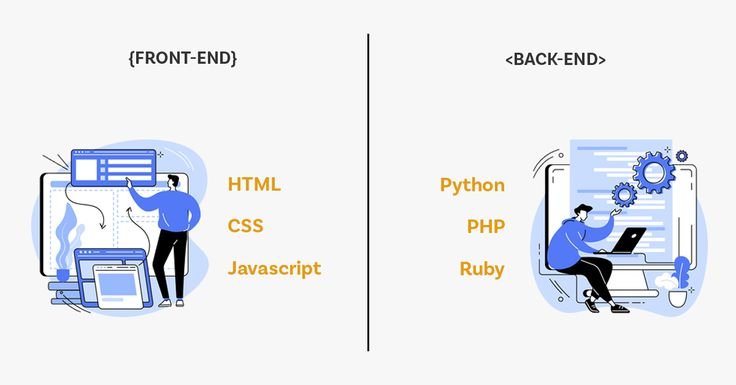
Front-End vs Back-End vs Full-Stack Development: Complete 2025 Guide
If you're new to web development, one of the first questions you’ll face is:
“Should I be a Front-End Developer, Back-End Developer, or Full-Stack Developer?”
These roles are the core of modern web development, but the differences aren’t always clear. This 2025 beginner-friendly guide explains each path in simple terms — including tools, workflows, responsibilities, and how to choose the best track for you.
1. What Is Front-End Development? (Client Side)
Front-end development focuses on everything the user sees and interacts withinside the browser.
This includes:
- Website layout and structure
- Buttons, forms, and navigation
- Animations and transitions
- Colors, typography, and spacing
- User interface (UI)
- User experience (UX) on the visual side
Front-End Technologies in 2025
- HTML5 – page structure
- CSS3 / Tailwind CSS – styling and layout
- JavaScript – interactivity and logic
- Vue.js / React / Svelte / Next.js / Nuxt.js – modern front-end frameworks
Front-End Developer Responsibilities
- Build responsive page layouts
- Create interactive components (menus, sliders, forms, etc.)
- Optimize speed and performance on the client side
- Ensure the site is mobile-friendly and accessible
- Work closely with designers to translate UI/UX into code
Who is this path for?
Ideal for people who enjoy visuals, UI design, motion, and creating interfaces that users actually touch and see.
2. What Is Back-End Development? (Server Side)
Back-end development handles everything that happens behind the scenes — the part users don’t see but rely on.
It focuses on:
- Databases and data storage
- Authentication and user accounts
- Business logic and server-side processing
- Payment processing and transactions
- Building and managing APIs
- Security, validation, and permissions
Back-End Technologies in 2025
- PHP (Laravel)
- Node.js (Express, NestJS)
- Python (Django, FastAPI)
- Go (Golang)
- PostgreSQL / MySQL / MongoDB for databases
Back-End Developer Responsibilities
- Design and manage databases
- Implement server-side logic and business rules
- Develop and maintain APIs
- Handle security, encryption, and access control
- Optimize server performance and scalability
Who is this path for?
Great for people who enjoy logic, problem-solving, data, and working with systems that power the application.
3. What Is Full-Stack Development?
Full-stack developers work on both front-end and back-end. They understand how the entire application fits together — from UI to database.
A full-stack developer typically works with:
- UI and UX implementation
- Server-side logic
- Database design and queries
- APIs and integrations
- Deployment and basic DevOps
Common Full-Stack Tech Stacks
- Laravel + Vue/Nuxt
- Node.js + React
- Django + React
- Go + Next.js
Full-Stack Developer Responsibilities
- Build complete applications end-to-end
- Integrate front-end interfaces with back-end APIs
- Manage deployments (Linux, VPS, cPanel, CI/CD pipelines)
- Collaborate with design, QA, marketing, and other teams
- Troubleshoot issues across the entire stack
Who is this path for?
Ideal for people who want versatility, more control over projects, and access to higher-paying, broader-scope roles.
4. Real-World Example: How These Roles Work Together
Imagine you're building an e-commerce website.
Front-End Developer
Handles:
- Product listing and product page layouts
- Add-to-cart buttons and interactions
- Checkout form UI
- Responsiveness on mobile, tablet, and desktop
Back-End Developer
Handles:
- Storing product, user, and order data
- Processing checkout logic
- Integrating payment gateways
- Generating invoices and order confirmation emails
Full-Stack Developer
Can take care of:
- Designing the UI and layouts
- Implementing APIs and business logic
- Managing the database schema
- Configuring hosting, SSL, and deployment
This flexibility is why full-stack developers are often in high demand for startups and smaller teams.
5. Salary Comparison (2025 Estimates)
Based on Philippine market ranges and typical global remote freelance rates.
| Role | PH Market Range (Monthly) | Global / Remote Freelance Range (Monthly) |
|---|---|---|
| Front-End Developer | ₱35,000 – ₱70,000 | $800 – $3,000 |
| Back-End Developer | ₱40,000 – ₱90,000 | $1,000 – $4,000 |
| Full-Stack Developer | ₱60,000 – ₱150,000+ | $1,500 – $6,000 |
Full-stack roles often command higher rates because they cover more parts of the development process.
6. Which Path Should You Choose in 2025?
Choose Front-End if:
- You love design and visuals
- You enjoy UI/UX and interaction
- You like turning mockups into real interfaces
Choose Back-End if:
- You enjoy logic and problem-solving
- You like working with data, APIs, and systems
- You’re interested in performance, security, and architecture
Choose Full-Stack if:
- You want flexibility and broader skills
- You want to build complete apps end-to-end
- You’re aiming for higher-paying, more independent roles
7. Final Tips for Learning Web Development in 2025
- Learn at least one front-end framework (Vue or Nuxt is a strong choice).
- Learn one back-end framework (Laravel is highly recommended).
- Build real-world projects instead of just following tutorials.
- Create a portfolio website to showcase your work.
- Practice deploying apps to real hosting (VPS, shared hosting, etc.).
- Learn Git and GitHub for version control and collaboration.
- Stay updated with modern tools, standards, and best practices.
Web development will keep evolving, but whether you choose front-end, back-end, or full-stack, the core skills you build today will continue to be valuable for years.